
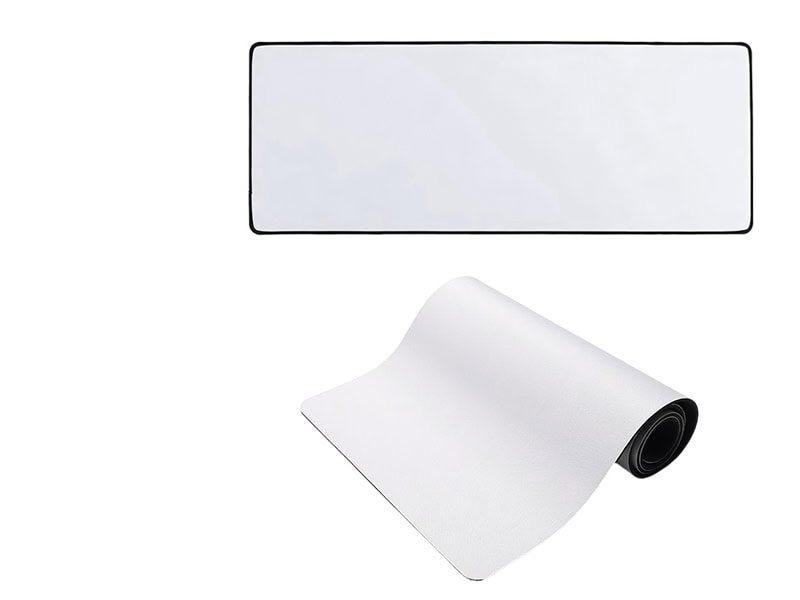
A mouse pad that slips neatly into a laptop sleeve can feel too firm on a shared desk. A cushioned pad that one gamer likes can catch another player’s forearm at the edge. For a fabric mouse pad with a rubber foam base, thickness changes two things you can feel: the step up from the desk and how much material there is to compress. The fabric, foam firmness, and edge finish matter too.
Which thickness should you sample first?
| Thickness | Start here when… | Check on the sample |
| 2 mm | The pad travels with a laptop or fits a flat mailer. | Does it fit the actual sleeve and lie flat when unpacked? |
| 3 mm | One office pad will be used by people with different grips. | Does the front edge feel comfortable during ordinary mouse movements? |
| 5 mm | Buyers want a more cushioned feel and have a permanent desk setup. | Does the mouse still glide as expected when the user presses down? |
2 mm for a travel kit or a low desk edge
On a smooth desk, a 2 mm pad puts the mouse close to desktop height. People who slide their forearm on and off the pad have a small step to cross. There is also less foam between the hand and the desk, so a coarse desktop texture may be easier to feel.
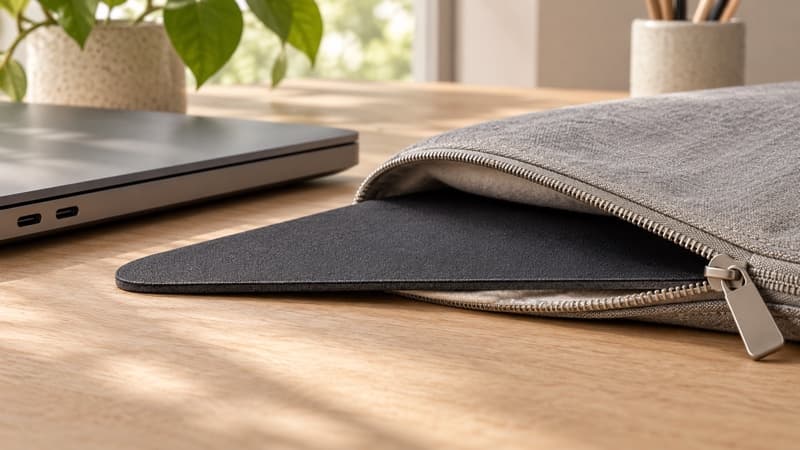
For a laptop bundle, test the finished pad in the sleeve with the laptop already inside. Check that the zipper clears the stitched edge. Take the pad out, lay it on the desk, and move the mouse across each corner. A corner that stays lifted matters more to the traveler than the millimeter saved in the bag.
3 mm as a starting point for shared office desks
If you are ordering one model for a team, use 3 mm as the middle sample. Compared with 2 mm of the same construction, it adds just 1 mm of height. A raised seam can be more noticeable than that difference, particularly for someone whose forearm rests across the front edge.
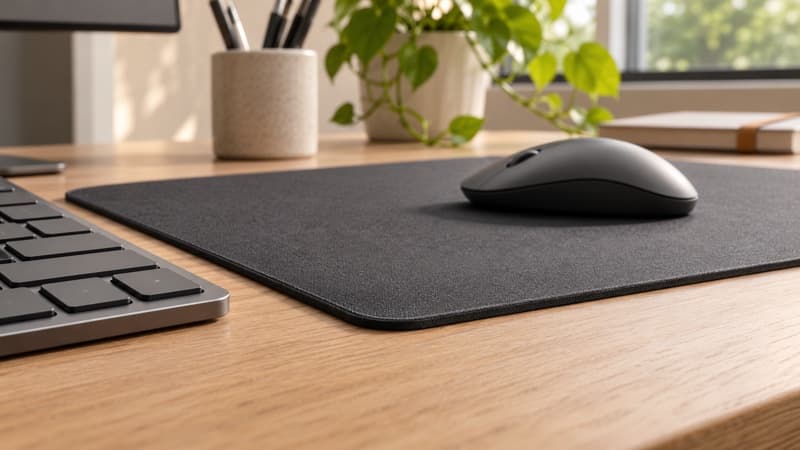
Place both samples beside the keyboard your team uses. With the same mouse and pointer settings, select a few cells in a spreadsheet, drag a file across the screen, then move your hand back to the keyboard. Ask where the user felt the edge. If the seam is the issue, try a lower stitched edge before changing thickness.
5 mm when buyers want more give under pressure
A 5 mm foam base leaves more room to compress under a hand. How much it gives depends on the foam: a firm 5 mm sample can feel harder than a soft 3 mm one. The higher edge is also easier to notice when the keyboard sits directly on the desk beside a small pad.
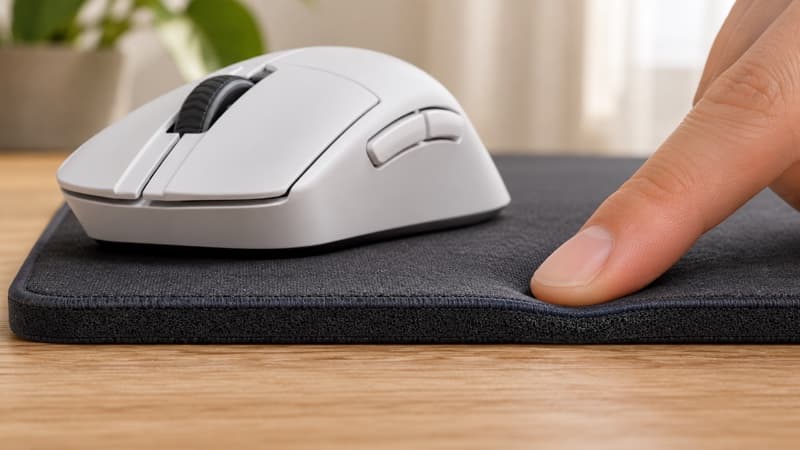
For a gaming range, try a slow diagonal movement with a light grip, then repeat with the player’s usual downward pressure. Check whether the mouse feet sink enough to change the feel of a stop. For an extended desk mat, repeat with the keyboard on the mat. This raises both devices together and gives a better picture of the setup buyers will actually use.
How to approve a thickness for a bulk order
Request finished samples with the same footprint, fabric, foam formulation and density, base texture, and edge finish. Mark the thickness on the underside so testers can try each one before seeing its label. Creatprinting lists 2, 3, and 5 mm among its natural rubber mouse pad options. Specify which construction you want held constant in the quote.
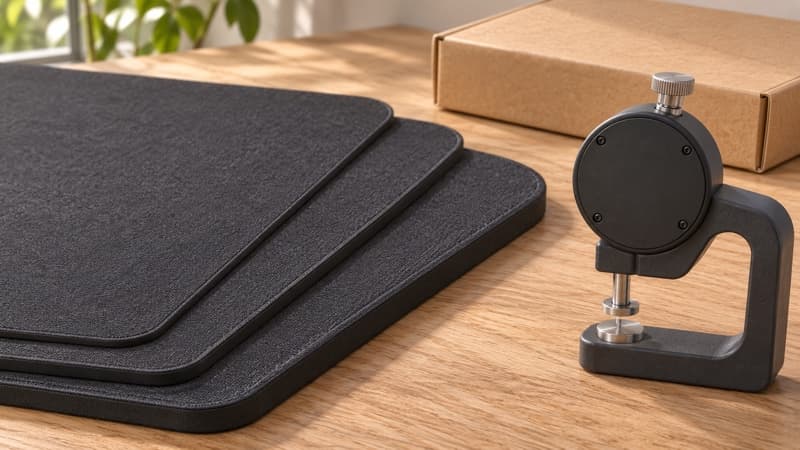
Record the preferred sample and why it won. Agree on finished thickness, tolerance, and a measurement method with the supplier: squeezing soft foam between caliper jaws can change the reading. For shipping, ask for the packed carton dimensions, gross weight, and units per carton for each option. Keep one approved sample in its final packaging for comparison when the order arrives.
Tell us the desk setup, pad size, and order quantity. Contact Creatprinting for thickness samples and a bulk quote.