
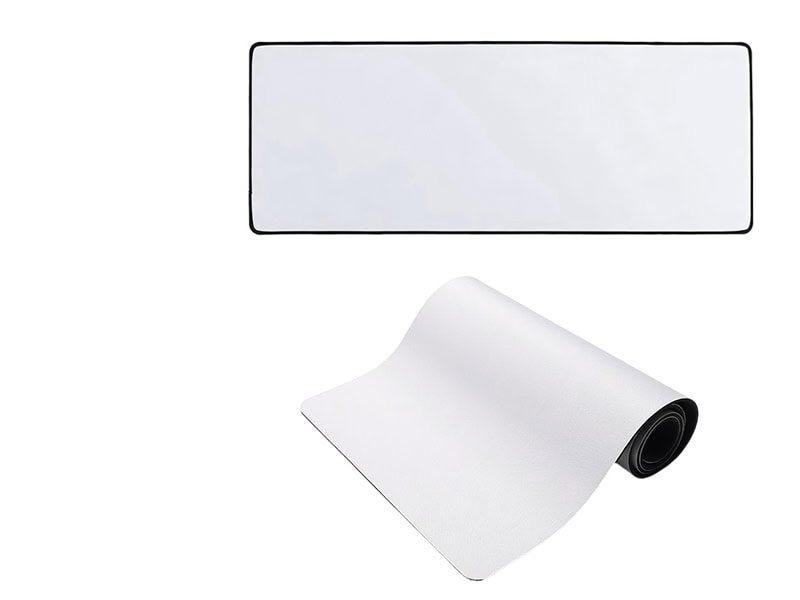
Two suppliers can quote different “rubber mouse pads” and both can be right. One may offer a fabric surface on a natural rubber base. The other may offer a clear PVC surface on the same type of base. Both pads may grip the desk well, yet feel different under a mouse and display the same artwork differently.
When comparing mouse pad materials for a bulk order, ask suppliers to name the surface, the base, and any wrist support separately. Then choose a sample based on the job it needs to do. An employee using a mouse all day, a client opening a branded gift, and a customer reading a calendar printed on the pad each have a different reason to prefer one design.
Which mouse pad should you sample first?
| If your buyer needs… | Start with… | What should decide sample approval? |
| An everyday office pad that stays in place | A fabric-top mouse pad with a natural rubber base | The mouse moves smoothly while the pad stays put on the intended desk. |
| A coordinated desk set with a subtle logo | A custom PU leather mouse pad or desk mat | The logo reads clearly on the chosen grain, and the finish looks consistent after cleaning. |
| A promotional pad with a calendar, map, or detailed illustration | A PVC promotional mouse pad | The smallest text is legible under office lighting, and the mouse tracks across the artwork. |
| A retail or office pad with raised support | A wrist-rest mouse pad | The support suits the intended mouse, with enough flat space left for movement. Confirm the support material if your brief calls for silicone. |
Natural rubber base for everyday office use
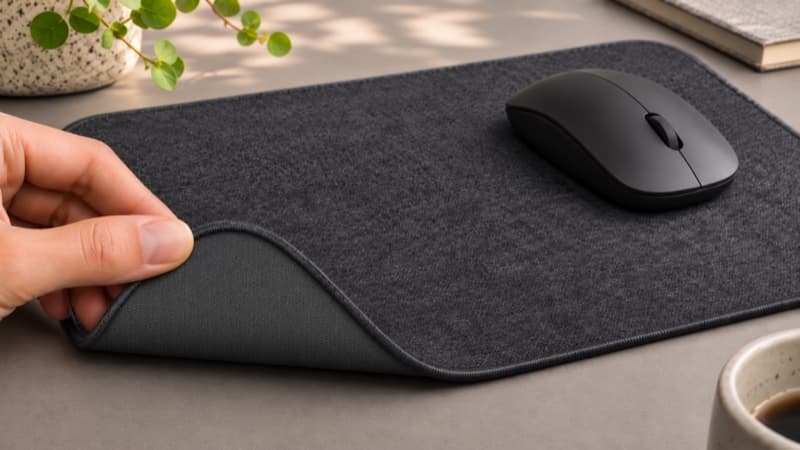
For an office order, start with a fabric-top sample if staff want a soft surface and the pad needs to stay in place. The natural rubber base touches the desk. The fabric touches the mouse. Specify both layers so suppliers can quote the construction you tested.
Test the sample on the same type of desk your customer uses. Mark its starting position, then move the mouse across it several times, including quick stops and changes of direction. Check whether the pad shifts or an edge lifts. If the design has an edge-to-edge print, inspect a finished sample with your artwork. A blank swatch lets you judge the fabric by touch. A printed pad shows whether the final cut comes too close to a logo or line of text.
PU leather for branded desk sets
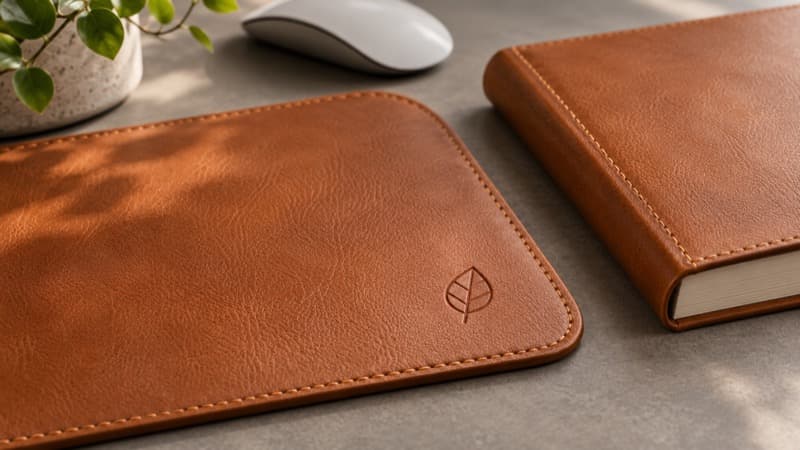
PU stands for polyurethane. For a welcome kit or client gift, a PU leather mouse pad is worth sampling when the buyer wants a leather-like finish that coordinates with a notebook, organizer, or desk mat. Specify the actual product color, surface grain, and smallest version of the logo when requesting the sample.
A fine-line logo may look crisp in a digital proof and lose detail when pressed into a textured surface. Ask for a sample made with the proposed logo method. View it at arm’s length beside the other items in the kit. Then wipe it according to the supplier’s care instructions and inspect the logo, finish, and edges after drying. If the kit ships rolled, open a sample packed the same way and see how it lies on the desk.
PVC for calendars, maps, and detailed graphics
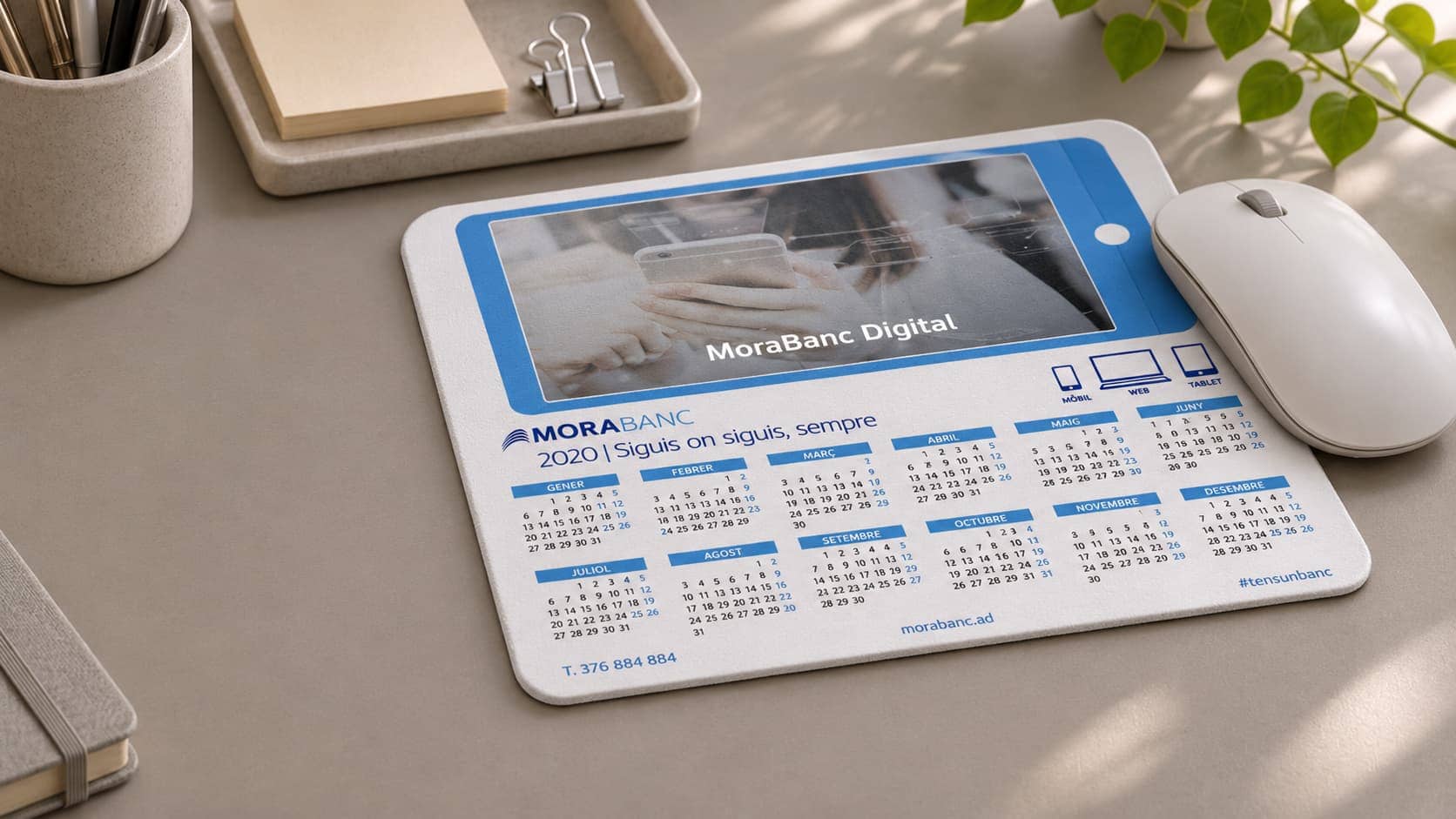
PVC, or polyvinyl chloride, is worth considering when the printed information is a main reason to keep the pad. A clear PVC top can cover a printed insert, while other models carry graphics printed directly on the PVC. Ask where the artwork sits and which layer the mouse touches.
For a calendar pad, the most revealing part of the proof may be the smallest date. Print one month at final size, including the lightest text and thinnest grid lines. Read it from a seated position under overhead lighting, then move the intended mouse across light and dark areas. For a shared workstation, confirm that the usual desk cleaner is suitable for the finish, then use it on the sample and inspect the surface after it dries.
Silicone wrist rests for a support-focused range
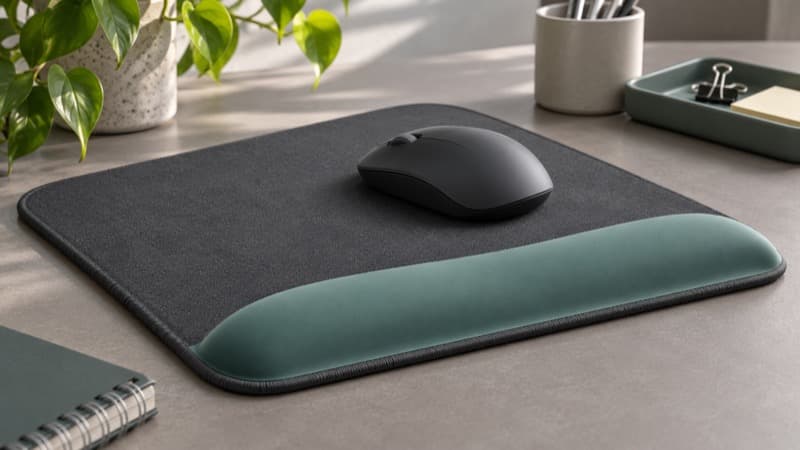
A silicone wrist rest adds a raised section to the pad. The buyer still needs to specify the tracking surface and base. If the quotation describes the item as a “gel mouse pad,” ask the supplier to identify the cover and filling separately and confirm which component is silicone.
Two pads with the same outer dimensions can offer different amounts of usable mouse space. Ask for the height of the rest and the depth of the flat area in front of it. Try the sample with the mouse your customer plans to use. Can users move the pointer across the screen comfortably at their usual settings? Does the rest suit both smaller and larger hands? For retail orders, open a sample after it has spent time in the proposed packaging and check that the support regains its shape.
How to compare bulk quotes and approve a sample
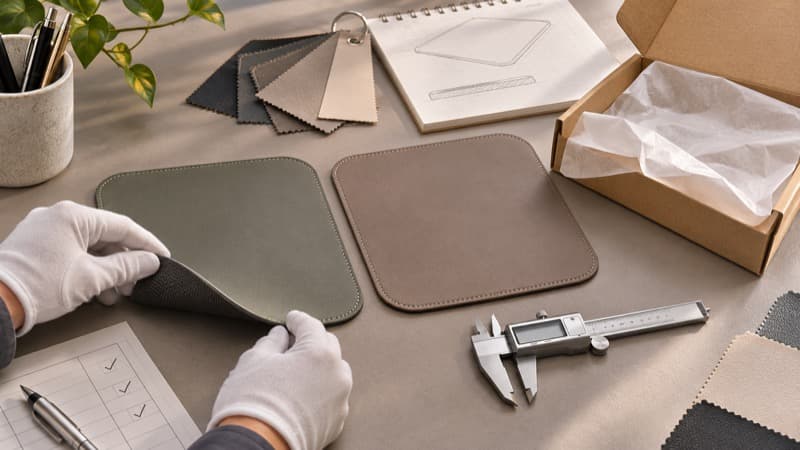
Give each supplier the same brief. Include the finished dimensions, surface and base materials, thickness, artwork, order quantity, individual packaging, destination, and required arrival date. For a wrist-rest model, add the support dimensions. Ask suppliers to show sample charges, setup or tooling fees, packing costs, and freight separately. A raised pad may need a larger retail box, and a custom logo may require a new tool. Both can affect the cost of the order.
Keep one approved, packed sample as the reference for production. Record the details that mattered in testing, such as the grain and logo on a PU pad, the smallest readable type on a PVC pad, or the usable tracking area on a wrist-rest model.Planning a custom mouse pad order? Send us your intended use, size, quantity, and artwork so we can recommend a material and quote a sample. Contact Creatprinting for a sample and quote.