
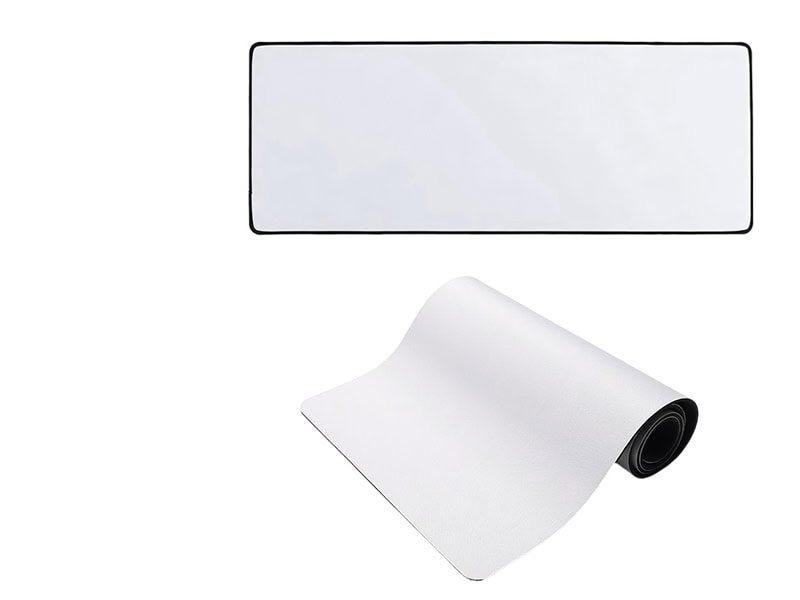
If you have a finished mouse pad drawing, send it with the materials and dimensions you want the factory to reproduce. If you have a customer in mind but only a rough idea of the product, send a brief and ask the supplier to propose a design. Both projects can end with the same branded mouse pad. They start with different people making the design decisions.
| Route | What the buyer brings | What the supplier returns first |
| OEM · Original Equipment Manufacturer | A buyer-defined design or specification | A feasibility review, production options, and a quotation against that specification |
| ODM · Original Design Manufacturer | A use case, brand direction, and commercial constraints | A proposed design or existing model to adapt, with the available changes and their cost |
1. Set the brief and agree who will design the pad
Suppose a distributor needs a desk mat for an employee welcome kit. The box has already been ordered. Its inside dimensions and the delivery date belong in the first email, alongside the expected quantity and the way the mat will be packed. A reference photo alone leaves the supplier guessing which details matter.
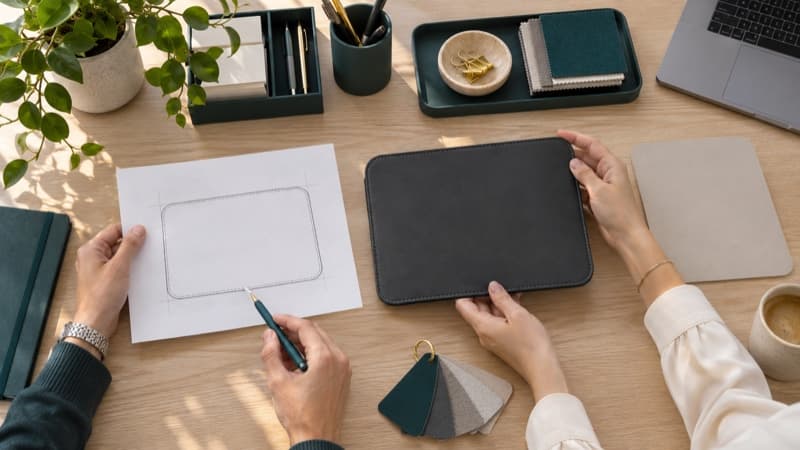
For OEM, identify the drawing revision and mark the dimensions the supplier must preserve. For ODM, ask for a proposed starting model and a list of what can change. Agree in writing who supplies the editable files, who may reuse the design, and whether any custom tooling is shared or exclusive. End this step with a brief that names the person authorized to approve changes.
2. Turn the design into a specification suppliers can quote
List finished length and width, thickness, surface fabric, base material, edge finish, print coverage, and pack format. For an office pad, specify how it should grip the intended desk. For a gaming mat, compare mouse glide on the actual surface. Creatprinting lists fabric, thickness, and edge options for its natural rubber mouse pads.
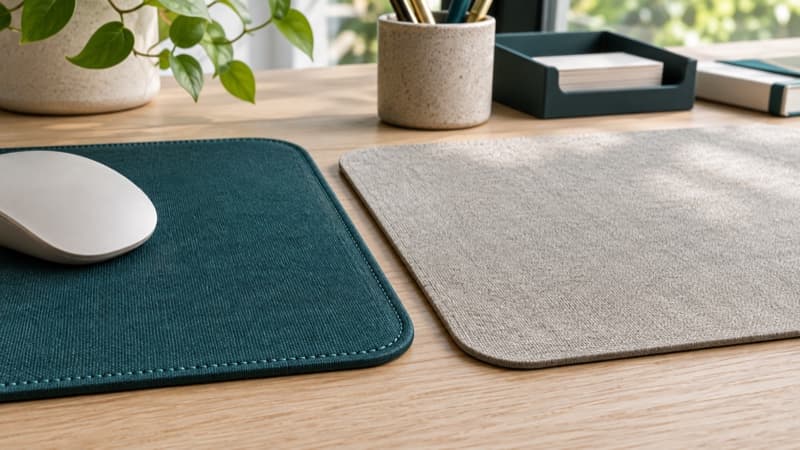
Ask each supplier to quote the same quantity per design and separate sample, setup, tooling, packaging, and shipping charges. Ask for the minimum order quantity per color or design and when the production lead time starts. For ODM, have the supplier mark which features come with the standard model and which need development. Keep the dated specification and quotation together.
3. Approve artwork at finished size
Ask for a template showing the cut line, the stitched area, and the bleed: the extra artwork extending beyond the cut. Place the logo and small text inside the safe area specified for that model. With an all-over print, inspect a corner at actual size. A thin border that looks even on screen can expose a small shift after cutting.
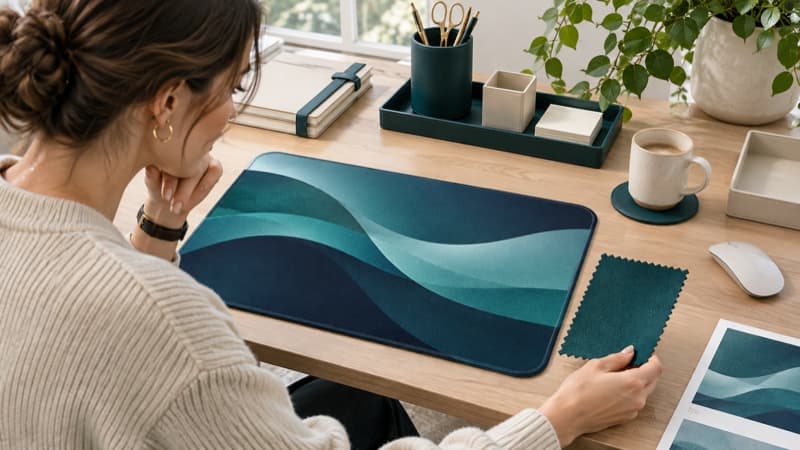
For OEM, the buyer checks the proof against the supplied file. For ODM, the supplier should show how its proposed design fits the chosen shape, then return the agreed revision to the buyer. Approve the layout by file name and date. If brand color matters, also provide a physical reference for the next step; the screen proof settles placement more reliably than it settles color on fabric.
4. Sign off a finished sample in its sales packaging
Request a finished sample made with the proposed production materials and print process. Use it with the intended mouse on a representative desk. Check grip, glide, dimensions, edge feel, and the logo at normal viewing distance. For the welcome kit, put the pad and the other items in the actual box, close the lid, and check how the pad lies after unpacking.
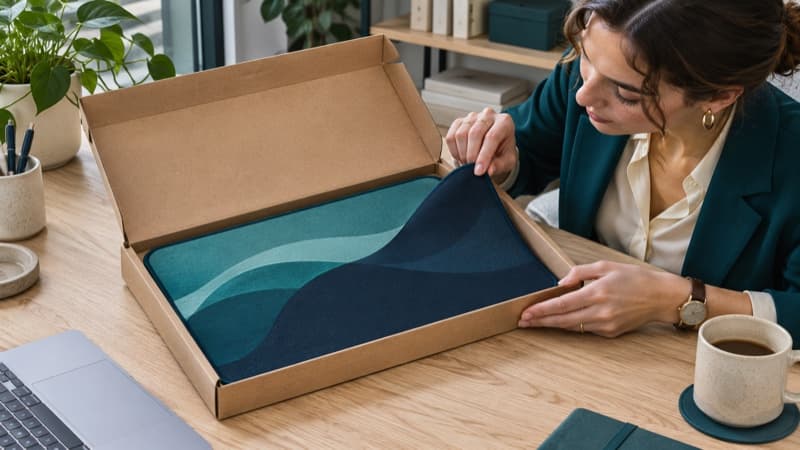
Label the sample and record the matching artwork and packaging revisions. If the color is approved but the edge needs work, record those as separate decisions and inspect the revised edge before authorizing production. Keep matching reference samples with the buyer and factory. For retail orders, see the private-label mouse pad packaging guide.
5. Release the order and inspect the production batch
Put the approved sample ID, specification revision, quantity per design, packaging, and delivery terms on the purchase order. Agree which dimensions have tolerances, how many units to inspect, and what should happen if a check fails. Ask the supplier to flag any proposed change of fabric, base, or print process before using it.
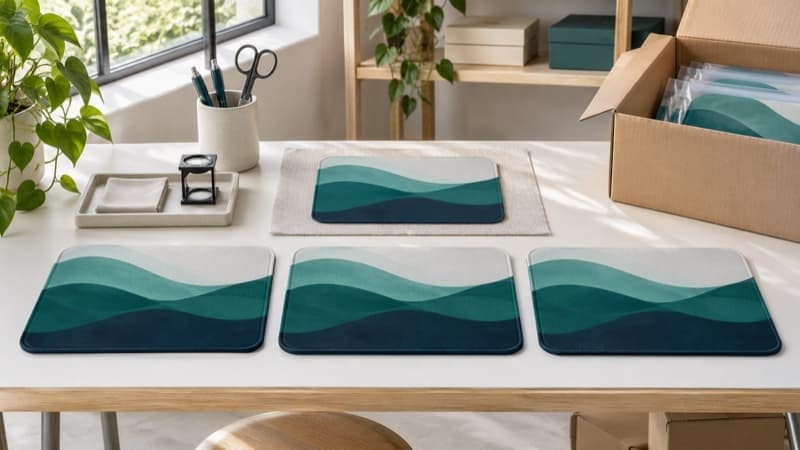
Before shipment, compare units from several cartons with the signed sample. Check the printed design, edges, count per carton, shipping marks, and packed dimensions. Record the batch and approved files under the product code. When reordering, that record lets the supplier reproduce the version customers bought.
Have a finished design or an idea for a new pad? Send the intended use, size, quantity, artwork or references, and target delivery date. Contact Creatprinting to discuss a sample and quote.