
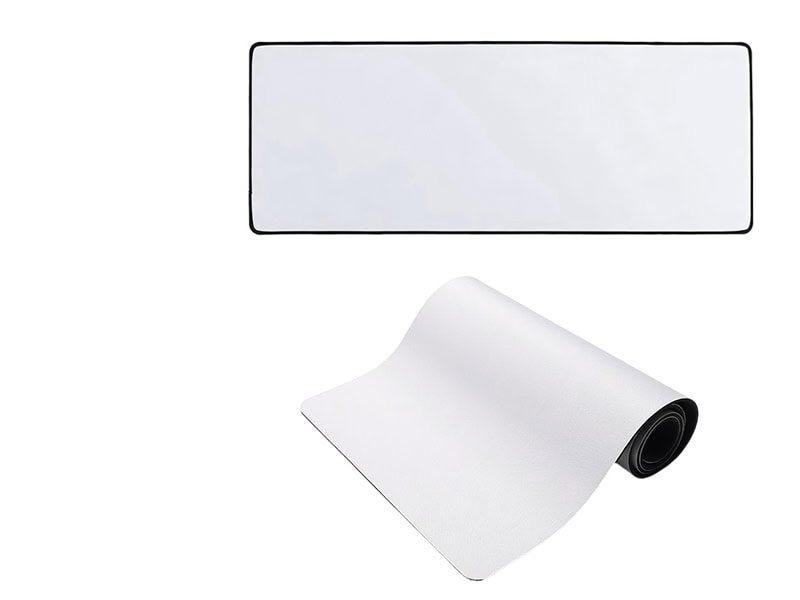
A white mouse pad can look clean in the box and still spoil a print. A pale stripe may appear only across a solid color. A corner that lies flat before pressing may lift after cooling. For a shop buying rubber-backed fabric blanks, keep two references: an unprinted sample and a cooled print made under recorded production conditions.
1. Identify the lot and measure the blanks
Start with the purchase specification: face fabric, base material, finished shape, dimensions, thickness, edge finish, and printing method. A showroom sample helps you choose a construction. To approve an incoming delivery, draw samples from the actual lot, across cartons and stack positions. Record each carton and sample ID. Agree on sample count, tolerances, and the rule for holding a lot before testing.
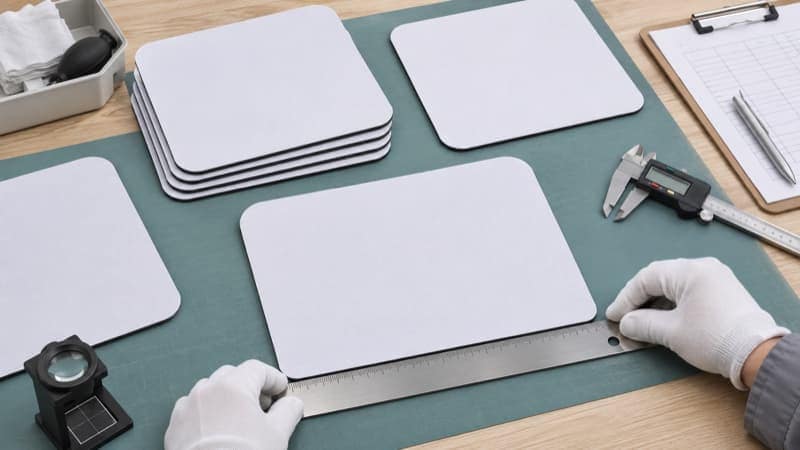
Let each blank lie flat after unpacking. Measure length and width without stretching it. Use the same thickness gauge and contact pressure at the center and near several edges, clear of stitching. Soft foam compresses under caliper jaws. Record individual readings so a thin corner cannot disappear into an average. Compare the corners with the agreed cutting template.
2. Check the print face, bond line, and desk grip
Place the candidate beside the approved white sample under steady light. Look straight down to compare shade, then light the surface from the side to reveal snags, dents, and ripples. Photograph any dark fleck in an area where the customer’s artwork will leave the fabric white. Mark its location on the photo for comparison after printing.
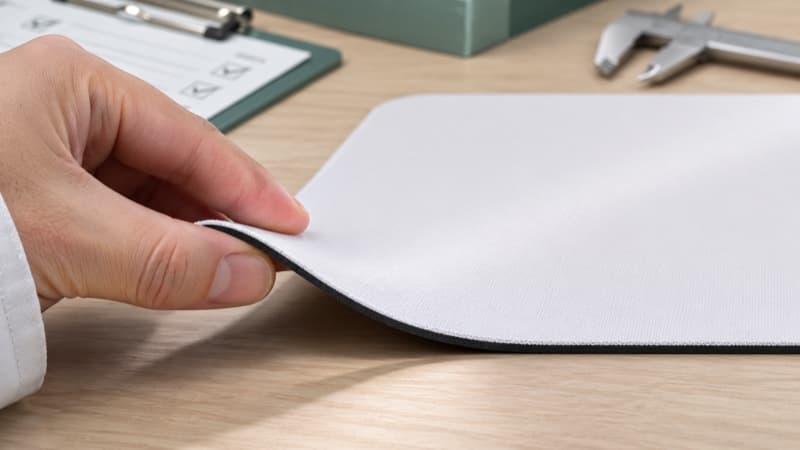
Run a finger around the perimeter and gently flex each corner. Watch for a gap between fabric and rubber. On stitched pads, check for loose loops and raised seams. Lay the pad on the intended desk and move the usual mouse through several quick stops. Record any slipping or edge lift. If the order specifies a bond strength, agree on a measured peel test with the supplier.
3. Test-print the candidate alongside a known-good blank
For sublimation, confirm that the face fabric is suitable for the process. Build a test design with a dark solid, a pale tint, fine lines, an unprinted white patch, and the smallest logo in the customer’s artwork. Match the sample to the proposed construction using the blank sublimation mouse pad specifications.
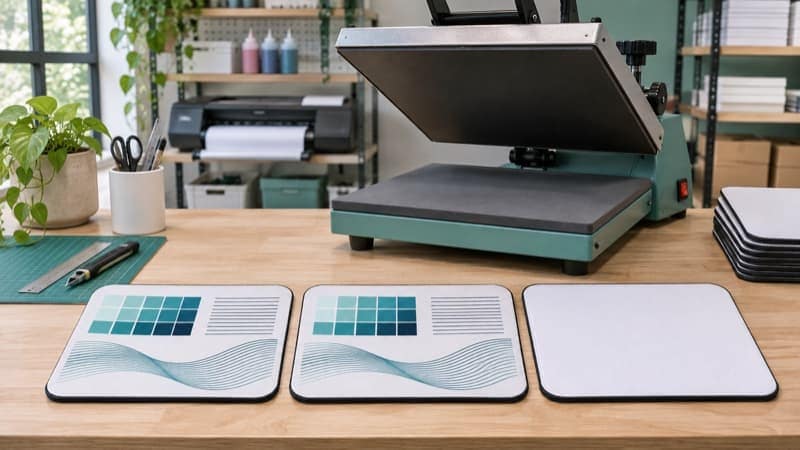
Print the candidate and a previously successful blank of comparable construction using the same file, ink, paper, and press procedure. Use settings recommended for the selected blank and equipment. Record time, temperature, pressure setting, and press position. Once both pads cool, compare color uniformity, line sharpness, white areas, dimensions, flatness, and bonding. If the same pale patch appears on both, check the transfer and press setup first. If it appears only on the candidate, repeat with fresh pieces and swap their press positions. Hold the lot for investigation if the fault follows the candidate.
4. Document the decision and retain a pair of samples
A note such as “Carton C3, pad 02: upper right corner lifted after cooling; control stayed flat” gives the supplier something to investigate. Add the measured gap if the specification sets a flatness limit. Attach before-and-after photos, the test file version, and press settings. For failed checks, separate the affected lot and agree on a correction and retest.
When the sample passes, retain one labeled blank and one cooled print with the dated specification. Approval of a pre-production sample establishes the reference for the incoming order. Check the actual bulk lot against that reference before releasing it to the print floor.
Pre-production inspection record
Order / lot ______ Cartons / sample IDs ______ Specification revision ______
| Check | Agreed limit or reference | Observed result / photo ID |
| Dimensions, thickness, corners | ||
| Fabric shade and surface defects | ||
| Bonding, edge finish, flatness, grip | ||
| Test print and post-press dimensions |
Decision: Release / Hold / Retest Reviewer and date ______
Planning a bulk print run? Send your pad dimensions, printing method, artwork, and expected quantity. Contact Creatprinting to discuss blanks and request a sample quote.