
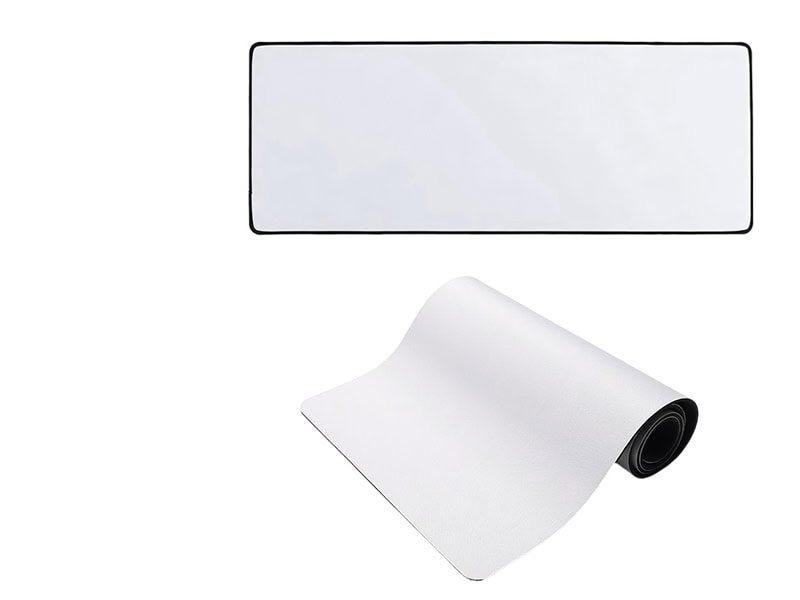
Launching a mouse pad for your online store takes more than a good design.
You will also require appropriate materials, precise print outcomes, dependable production, and packaging that safeguards your product.
For wholesale buyers and growing brands, these details affect product cost, customer reviews, and future orders. A sample may look good, but your bulk order needs to meet the same agreed standards.
OEM mouse pads let you build a product around your own design and specifications. OEM stands for Original Equipment Manufacturer. Your manufacturing partner produces the mouse pads based on details you approve, such as size, thickness, printing, and packaging.
This guide outlines the steps, from planning your initial product to getting ready to send a large order.
Step 1: Define the Mouse Pad Your Customers Need
Before choosing a material or asking for a price, decide who will buy your product and how they will use it.
Match the Product to Your Store
Different customers look for different features.
A gaming accessories store may need larger mouse pads with printed artwork and stitched edges. An office supply seller may focus on practical sizes, simple designs, and easy daily use. A design brand may put more weight on color, artwork, and the unboxing experience.
Start with a clear product idea. For example: We need a printed fabric mouse pad with a rubber base for our office accessories range. It should fit a standard desk setup and come in packaging with our brand name.
This gives your supplier a useful starting point.
Set Your First Order Requirements
When sourcing wholesale mouse pads, prepare the basic details before contacting suppliers.
| Planning Item | What to Decide |
|---|---|
| Target customer | Office users, gamers, design buyers, or another group |
| Product format | Standard mouse pad, extended pad, or desk mat |
| Order quantity | Total units and quantity per design |
| Target cost | Budget for the product, packaging, and delivery |
| Sales market | Destination country and sales channel |
| Delivery date | When the goods need to arrive |
If you plan to sell several designs, ask how the order quantity is divided.
A supplier might set minimum quantities for each size, design, or packaging type.
Start with a range you can manage. More sizes and designs create more samples, packaging versions, and stock to track.
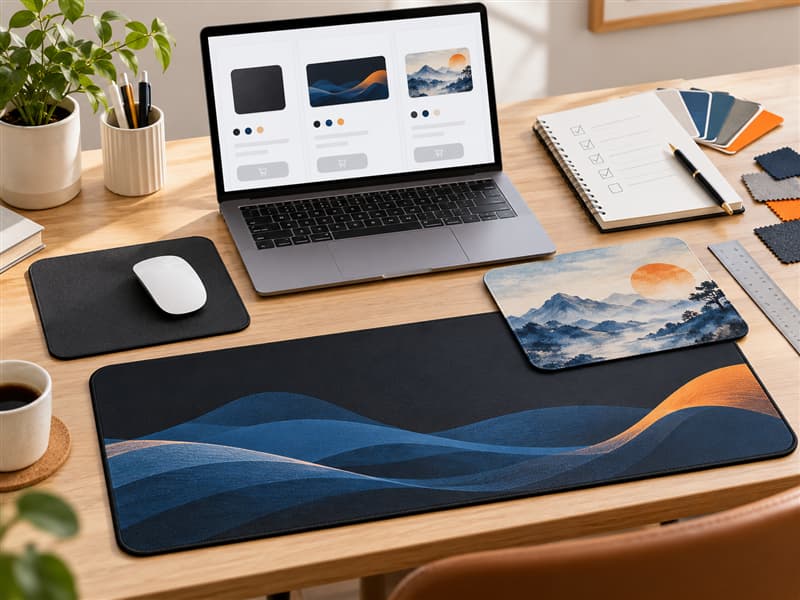
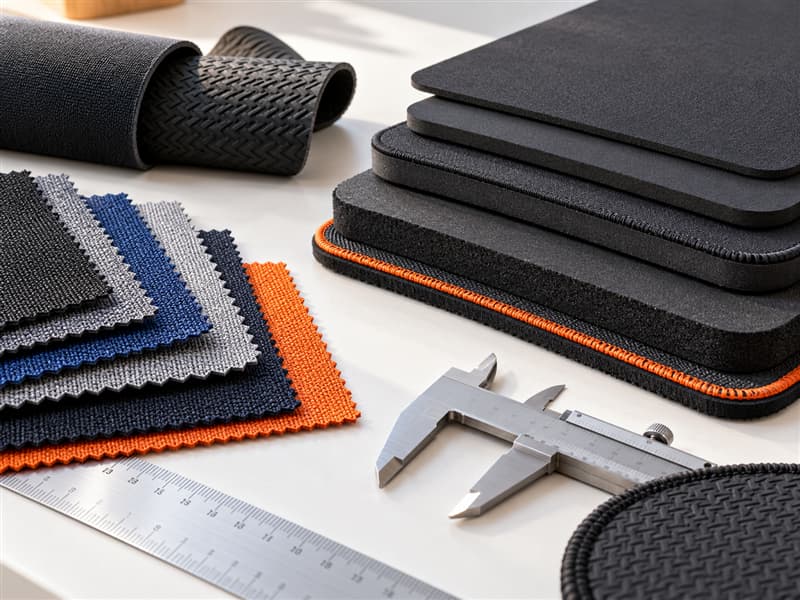
Step 2: Choose Materials, Size, and Thickness
Your product specifications affect how the mouse pad feels, looks, and ships. Choose them together instead of treating each detail as a separate decision.
Compare Surface and Base Options
For a fabric mouse pad with a rubber base, check both layers.
The surface affects mouse movement, hand feel, and print appearance. The base helps hold the pad in place. Ask for material samples when possible so you can compare the options yourself.
Useful questions include:
- How does the surface feel during normal use?
- Does the base stay in place on the intended desk surface?
- How does the artwork look on this material?
- What cleaning instructions should customers follow?
Avoid choosing only from photos. Two materials may look similar while feeling different in use.
Decide on Size, Thickness, and Edges
Size affects usable space and packaging dimensions. Thickness affects feel, product weight, and shipping costs. Edge finishing affects the final appearance and adds another detail to inspect.
| Product Detail | What to Check | Why It Matters |
|---|---|---|
| Size | Fit on the customer’s desk | Helps avoid a product that feels too small or too large |
| Thickness | Feel, weight, and flexibility | Affects use and shipping |
| Surface | Texture and print result | Shapes the customer experience |
| Base | Grip on the intended surface | Helps keep the pad in place |
| Edge finish | Smoothness and stitching quality | Affects appearance and comfort |
CreatPrinting’s mouse pad product range provides a starting point for discussing materials and custom specifications.
Once you choose a combination, put it in writing. Use the same specifications for samples, quotes, and bulk production.
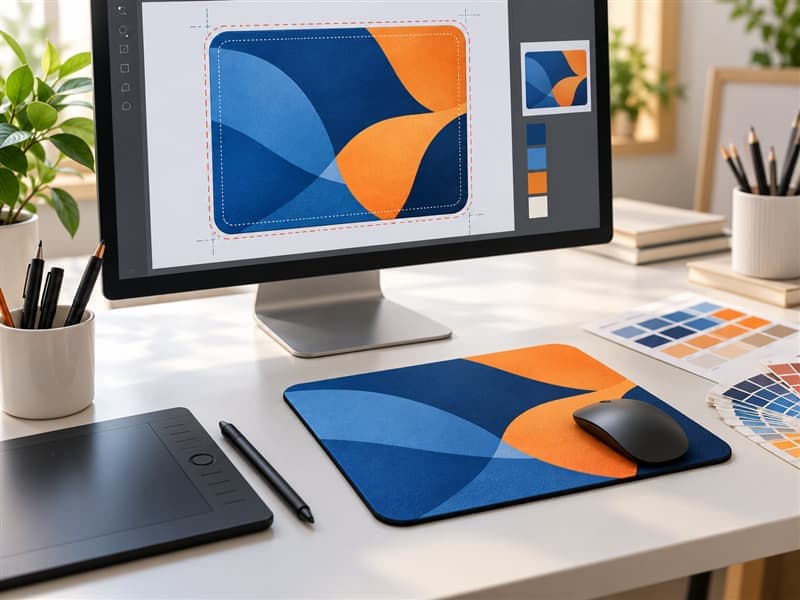
Step 3: Prepare Your Artwork for Printing
A design that looks clear on a screen may need changes before it can be printed. Small text, fine lines, and artwork near the edge all need careful review.
Ask for the Correct Artwork Template
Get a template from your manufacturer before finishing the design. It should match your chosen size, shape, and edge finish.
Confirm the required file format, image quality, bleed, and safe area.
Bleed is the extra artwork outside the final cutting line. It helps prevent an unwanted blank edge after cutting. The safe area keeps important text and logos away from cutting or stitching.
Follow these basic steps:
- Place your artwork in the supplier’s template.
- Keep key details inside the safe area.
- Check the spelling and direction of all text.
- Confirm the final print size.
- Send the file for a production review.
Ask your supplier for the exact file requirements. They may differ by material and printing method.
Confirm Colors and Logo Placement
Screens and printed products display color differently. Screen settings, fabric texture, and the printing process can all affect the result.
Provide a clear color reference if color matching matters to your brand. Then review a physical sample before approving bulk production.
Also confirm the logo’s size, position, and direction. Save the approved artwork with a clear version name so an older file is not used by mistake.
Step 4: Check a Sample Before Ordering in Bulk
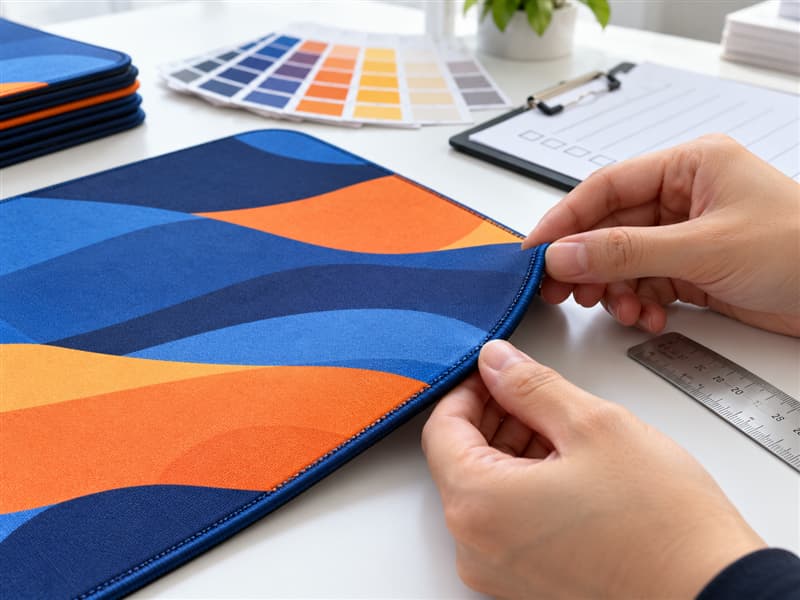
A sample gives you a chance to find problems before they affect a full order. Review it as a finished product, rather than checking only the printed image.
Review the Product and Print Quality
Use a checklist when the sample arrives.
- Measure the size and thickness.
- Check that text, images, and logos are clear.
- Compare the printed colors with your agreed reference.
- Inspect the surface and base.
- Check the edges for rough areas or uneven stitching.
- Place the pad on a desk and test normal use.
- Check its condition after unpacking.
If the product will be rolled for shipping, review a sample packed in that way. Confirm how it looks after opening and whether any care instructions are needed.
Record What You Approve
Keep the approved sample and a written specification sheet. Record any changes before the next sample or production run.
Your approval record should include:
| Item | Details to Record |
|---|---|
| Product | Material, size, thickness, and edge finish |
| Artwork | Approved file and version |
| Color | Approved sample or reference |
| Packaging | Type, dimensions, and printed design |
| Quality | Inspection points and agreed acceptance standards |
Ask your supplier which sample details represent the final production result.
Before granting approval, ensure that the sample has not employed a different material or packing method.
Step 5: Plan Private Label Mouse Pad Packaging
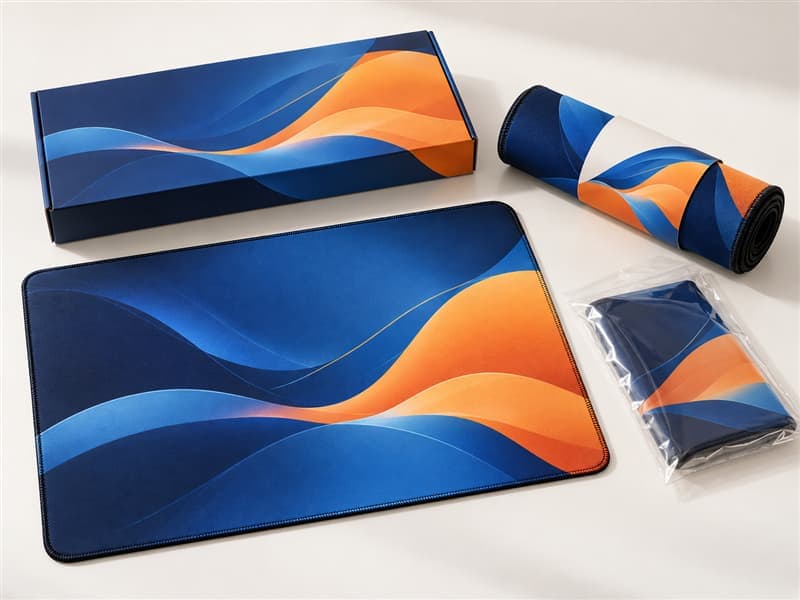
Packaging is part of the product. It protects the mouse pad, carries your brand, and affects storage and shipping costs.
For private label mouse pads, develop the packaging alongside the product so you can check both together.
Choose Packaging That Fits Your Product
Ask your supplier which packaging options are available for your chosen mouse pad.
| Packaging Option | Main Points to Review |
|---|---|
| Individual bag | Fit, protection, and label space |
| Branded sleeve | Brand visibility and how securely it holds the product |
| Retail box | Product fit, added cost, and packed dimensions |
| Rolled packaging | Product condition after unpacking and protection during transport |
A large box may offer more room for branding, but it can also increase shipping volume. A smaller package may save space, but it still needs to protect the product.
Compare the packed sample, rather than choosing from packaging photos alone.
Confirm Labels and Packing Details
Check every part of the packaging artwork before printing.
Confirm:
- Brand name and product name.
- Product size and other required information.
- SKU and barcode, where needed.
- Care instructions.
- Label position and readability.
- Individual package weight and dimensions.
- Units per outer carton and carton dimensions.
Before finalizing labels and packaging, it is important to verify the current requirements for your target market if you sell on platforms like Amazon.
Do not assume that branded packaging automatically meets a platform’s receiving rules.
Step 6: Compare Bulk Quotes and Choose Your Manufacturer
A useful quote explains what is included. The lowest unit price may cover a different material, simpler packaging, or fewer services.
Compare Quotes Using the Same Specifications
If you are looking for custom mouse pads in bulk, send the same specification sheet to each supplier.
Ask the quote to identify:
- Material, size, and thickness.
- Printing and edge finishing.
- Quantity per design.
- Packaging type.
- Sample and setup costs, where applicable.
- Production time.
- Delivery terms and shipping costs.
Compare the total cost of getting the goods ready for sale. Include product costs, packaging, shipping, and applicable import charges.
For instance, a cheaper product price might not save you much if the package size is bigger or if you need to do extra preparation with the goods once they arrive.
Ask About MOQ, Lead Time, and Repeat Orders
MOQ means minimum order quantity. It may depend on the material, dimensions, artwork, and packaging.
Ask your supplier:
- Is the MOQ based on the full order or each design?
- Does custom packaging have a separate MOQ?
- How long does sampling take?
- When does the production lead time start?
- What happens if a sample needs changes?
- How will specifications be kept consistent for repeat orders?
Separate the sample timeline, production timeline, and shipping timeline. This makes it easier to plan a realistic launch date.
Check the Manufacturer’s Quality Process
A manufacturer of mouse pads should be able to explain their process for checking the materials and the final products.
Ask how your approved specifications are shared with the production team. Find out which checks happen during production and before packing.
It’s also helpful to come to an agreement on how to manage defects or differences in specifications.
Clear expectations make problems easier to resolve.
Before shipment, request the agreed inspection records, product photos, or other evidence appropriate to your order.
How CreatPrinting Supports Your OEM Mouse Pad Project
CreatPrinting supplies mouse pads for brands, wholesalers, and other business buyers.
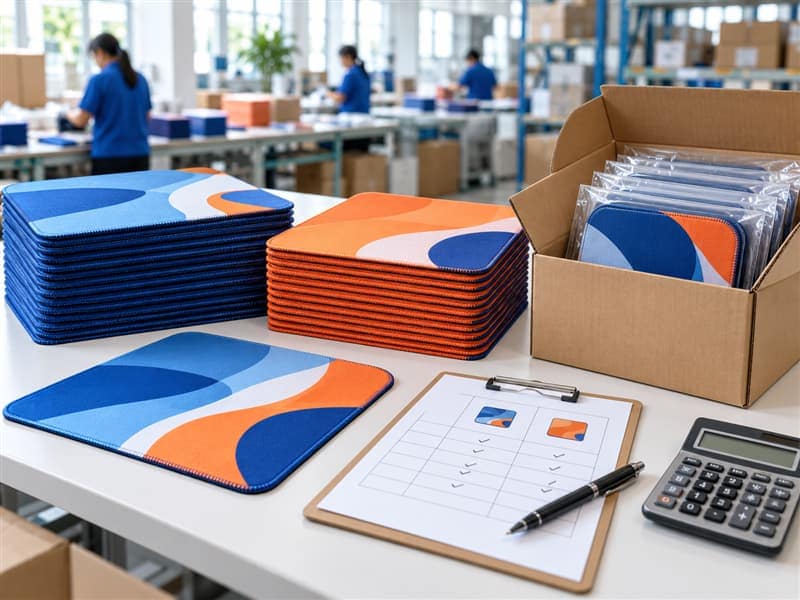
Its OEM services link the key phases discussed in this guide, which include product specifications, printing, samples, branded packaging, and bulk production.
Available customization includes materials, surfaces, sizes, thicknesses, shapes, logos, and stitched edges.
Buyers have the option to either review existing samples to evaluate materials or talk about creating custom samples to assess the product prior to starting mass production.
Packaging needs can also be included in the project specifications. Explore CreatPrinting’s OEM capabilities.
For an online store owner, this implies that decisions about products and packaging can be made within the same project.
You can share your target market, artwork, order quantity, and delivery needs, then confirm the available options.
MOQ, pricing, sampling costs, and lead times should be confirmed for your specific order.
FAQs About OEM Mouse Pads
What is the difference between wholesale mouse pads and private label mouse pads?
Wholesale mouse pads are purchased in bulk, often for resale. Private label mouse pads carry a seller’s own brand. These can overlap: a business can buy a bulk order of mouse pads made with its logo, design, and branded packaging.
What information do I need for an OEM mouse pad quote?
Send the product type, size, thickness, material preference, order quantity, and artwork. Include packaging needs, delivery country, and target arrival date.
If certain details haven’t been finalized, please describe your target customer and budget. This will allow the supplier to offer suitable options.
Can I approve a sample before bulk production?
Yes, sampling can be arranged to review details such as materials, size, printing, workmanship, and packaging. Confirm what the sample includes, its cost, and its timeline. Record your approval and any changes before production starts.
Can I customize both the mouse pad and its packaging?
Product and packaging customization can be discussed together. Confirm the available packaging types, printing options, minimum quantities, and costs with your supplier. Review a packed sample when possible so you can check the fit, appearance, and protection.
Request a Quote for Your OEM Mouse Pads
Ready to create mouse pads for your online store or wholesale range? CreatPrinting supports custom specifications, printing, samples, and branded packaging.
Send your design, preferred size, order quantity, packaging needs, and delivery country. Include your target arrival date so we can discuss production and shipping plans.
Email CreatPrinting to request an OEM mouse pad quote and discuss your sample.